personal_project
liveOpenClaw Autonomous Workspace
Built the internal operating system for running multiple AI startups from a single agentic platform.
// what problem this solves
AI agents usually get worse as they become more powerful. Add enough tools, skills, and memory, and the context window fills up with irrelevant baggage. Startup prompts balloon past 20,000 tokens, hallucinations increase, and the system becomes brittle to operate. At that point, you are no longer leveraging the agent. You are managing its confusion.
// what I built
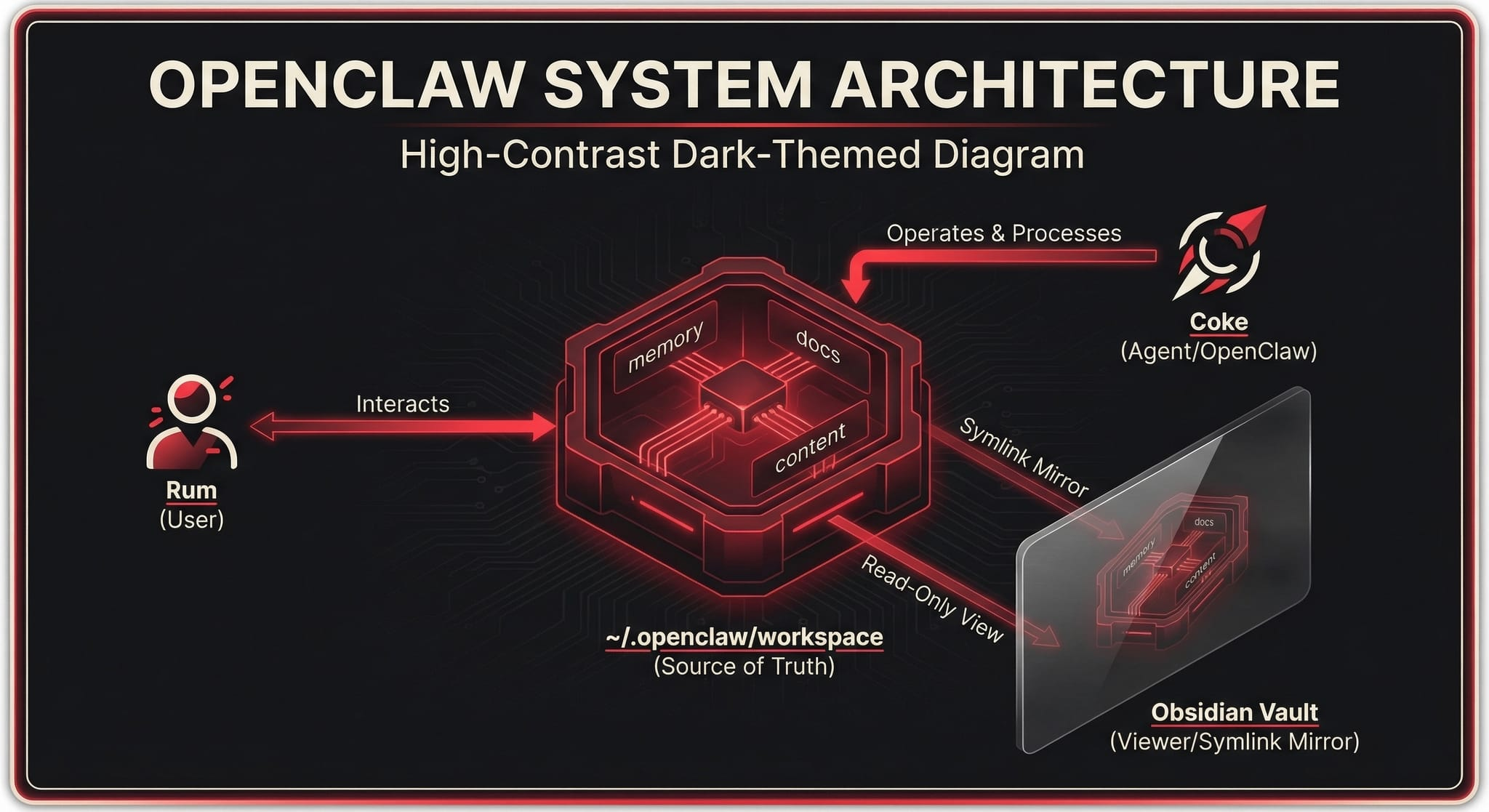
I built OpenClaw as a via negativa agent architecture: instead of adding everything everywhere, the system aggressively removes anything that does not belong in the current working context. The entire workspace lives in plain Markdown files under `~/.openclaw/workspace`, mirrored into Obsidian for human visibility, while each channel gets only the tools, memory, and capabilities it actually needs. That turned session startup from a bloated 27k-token prompt into a focused 5k-token operating context.
// how it works
The core routing model is channel-scoped. Discord channels act as hard execution boundaries, with only the minimum global capability available by default. Deep project knowledge lives in local `PROTOCOLS.md` files and is loaded on demand instead of polluting the root prompt. Skills are tightly governed by environment, so `#social-media` gets LinkedIn-writing capabilities while `#engineering` gets the coding agent and nothing else. Automated scripts continuously sort logs and decisions into the right project folders, keeping the root memory clean and making long-term context more durable over time.
// result
- High execution quality through extreme context hygiene with a 5k-token startup footprint
- Antifragile memory where failures become reusable rules and long-term decisions stay isolated
- Skin-in-the-game security with risky local actions gated behind explicit approval
- Barbell-style architecture with a hyper-stable core and higher-risk experiments isolated by channel
- A multi-agent system that stays usable by pruning aggressively instead of accumulating bloat
the stack